Why Choose Us
Factory Strength
Currently we have 2 full-automatic production lines and 4 manual production lines. Annual production is approximately 12 million pcs. Our management system is strictly conforms to IATF16949 quality certification system.
Production Market
Europe, North and South America, Asia, the Middle East.The Foreign Trade Department was established in 2011, and now customers have spread all over the world and won the praise of customers.
Provide OEM service
Provide customized services, including trademarks, product shapes, product parameters, etc.We can provide OEM service and help you with the R&D of new product and mould.
Our Certificates
Products passed CE, RoHS and UL certification, mainly sold to Japan, South Korea, Europe, USA, etc.
What is Radiator Fan
Radiator fans are usually a set of blades attached to a hub. The assembly can be all metal or plastic, and often made into different designs. The blades are curved or straight, long or short, and so on. A car radiator fan can also be electric and spun by an electric motor or mechanical and powered by the engine.Because it helps with lowering engine temperature, the radiator fan is one of the parts that constitute a vehicle's cooling system. Other components include the radiator, water pump, thermostat, and hoses. The coolant too, which takes away heat from the engine and dissipates it in the radiator core.
-
![5V DC Radiator Fan]() 5V DC Radiator FanThe 5V DC radiator fan also has the advantages of small size, light weight, high speed and low noise, so it is more compact in structure and easy to carry and install. The speed of a DC fan can be achieved by adjusting the voltage or usingread more
5V DC Radiator FanThe 5V DC radiator fan also has the advantages of small size, light weight, high speed and low noise, so it is more compact in structure and easy to carry and install. The speed of a DC fan can be achieved by adjusting the voltage or usingread more -
![DC Radiator Fan Cooling]()
-
![Mini DC Radiator Fan]() Mini DC Radiator FanThe mini DC radiator fan has better cooling effect than the AC fan. It is suitable for the environment with limited space, high safety, low noise, simple maintenance, and long service life. The cooling fan adopts PBT material, highread more
Mini DC Radiator FanThe mini DC radiator fan has better cooling effect than the AC fan. It is suitable for the environment with limited space, high safety, low noise, simple maintenance, and long service life. The cooling fan adopts PBT material, highread more -
![DC Radiator Fan Sleeve Bearing]() DC Radiator Fan Sleeve BearingThe pwm fan refers to the fan with adjustable speed, temperature control, and 4-wire. The fan has four black, yellow, green, and blue cables. By changing the duty cycle of the PWM, the speed change is linear, through the consumption ofread more
DC Radiator Fan Sleeve BearingThe pwm fan refers to the fan with adjustable speed, temperature control, and 4-wire. The fan has four black, yellow, green, and blue cables. By changing the duty cycle of the PWM, the speed change is linear, through the consumption ofread more -
![DC Radiator Fan Waterproof]() DC Radiator Fan WaterproofDc fans usually use brushless DC motors, which have obvious advantages over traditional AC motors. Specifically, brushless DC motors are smaller and lighter, with higher speeds and less noise. These features make the DC fan structurallyread more
DC Radiator Fan WaterproofDc fans usually use brushless DC motors, which have obvious advantages over traditional AC motors. Specifically, brushless DC motors are smaller and lighter, with higher speeds and less noise. These features make the DC fan structurallyread more -
![UL Passed 12V Radiator Fan]() UL Passed 12V Radiator Fan120X120X38MM high air flow cooling fan,built-in PWM and FG function.read more
UL Passed 12V Radiator Fan120X120X38MM high air flow cooling fan,built-in PWM and FG function.read more -
![RoHS Material 12V Radiator Fan]()
-
![Mini 12V Radiator Fan]()
-
![12V Radiator Fan Cooling]() 12V Radiator Fan Cooling12V 24V 172MM Industrial radiator fan cooling, 17251 brushless speed control fan, 3000rpm axial fanread more
12V Radiator Fan Cooling12V 24V 172MM Industrial radiator fan cooling, 17251 brushless speed control fan, 3000rpm axial fanread more -
![IP68 Radiator Cooling Fan]() IP68 Radiator Cooling FanHigh airflow big blower fan, IP68 radiator cooling fan, 145040 centrifugal fan for rubbish disposalread more
IP68 Radiator Cooling FanHigh airflow big blower fan, IP68 radiator cooling fan, 145040 centrifugal fan for rubbish disposalread more -
![UL Passed Radiator Cooling Fan]() UL Passed Radiator Cooling FanXinyujie UL passed dc axial fan, 7cm radiator cooling fan, 12 volt cooler fan for domestic electric applianceread more
UL Passed Radiator Cooling FanXinyujie UL passed dc axial fan, 7cm radiator cooling fan, 12 volt cooler fan for domestic electric applianceread more -
![RoHS Material Radiator Cooling Fan]() RoHS Material Radiator Cooling Fan60mm square plastic dc fan, ROHS material radiator cooling fan, 60x60x11mm axial fan for air purifierread more
RoHS Material Radiator Cooling Fan60mm square plastic dc fan, ROHS material radiator cooling fan, 60x60x11mm axial fan for air purifierread more


Benefits of Radiator Fan
High-efficiency
The two cooling systems are air cooling via the computer radiator Fan or the liquid complex systems, are counterproductive. These have a high thermal conductivity which means the heat diffusion through the various components is at a higher rate. Both liquid or air cooling let your systems operate at an optimally cool temperature that is consistent. A radiator fan typically only kicks into gear as the computer overheats.
Faster CPU and GPU performance
Internal radiator fans used in PC or laptops support faster speeds for improved overall performances. Internal system radiator fans are connected to the CPU or GPU heat sink. The two biggest heat-producing components produce enough heat that puts the systems at risk of damage due to overheating. Cooling systems(i.e. radiator Fans connected internally) produce enough heat to cope with the faster computer hardware that tends to produce more heat thus saving the systems from damage.
Lowering ambient temperatures
The computer operating temperatures are affected by the environmental or ambient temperatures that might deteriorate the working conditions in which the systems work. The rise in the temperature that accumulates around the device tends to be the main cause of disruption due to overheating. Here devices including the laptops have external cooling pads equipped with Radiator Fan that keep the ambient temperature down without requiring any modifications to the device's hardware.
Improve airflow and allow streamlined cooling
The cooling systems deployed in modern-day technology bring into focus the right kind of airflow streamlining. The positioning of these cooling systems on a hard, flat, or non-fabric surface tends to cool the enclosure systematically. The use of the four walls of the device for an air-intake source cools the systems obstructing the flow that could prove hazardous. This process of the hot air regulation and replacement with the cooler one proves significant in driving the best working conditions in and around the PCs.
Types of Radiator Fan
Mechanical Radiator Fan
This type of engine cooling fan runs off the crankshaft and is commonly found in older vehicles types. It's commonly attached to the water pump pulley and only spins when the engine is running. But the fan must only come on when necessary. To enable that, a special type of clutch is used. The clutch engages and disengages the fan based on the cooling needs of the engine.The mechanical radiator fan has both good and bad sides. Being mechanical than electric, it's less prone to failure, plus you can easily service a failed one. It also packs a lot of power and can move large volumes of air to cool massive or modified engines.
Electric Radiator Fan
These car cooling fans do not depend on the engine to operate. Instead they use a small electric motor. Alongside the motor, an electric cooling fan comes with a wiring system to support its operation. The system consists of wires, connectors, fuse, relay(s), sensors, and control module.Electric fans offer many benefits, and are considered the best fans for cars. One of them is their compact size, which allows them to install in tight places. An electric radiator fan also offers the advantages of control. Using sensors and ECUs, the fan can be made to only come on when needed.
Single Radiator Fan
As the name indicates, a single radiator fan is a one-fan assembly. It's the most common configuration and used in many different types of cars. A single radiator fan is not suitable for some applications, though. These include large engines that require a lot of air to take away the heat produced. Modified engines, too. In such situations, an assembly consisting of two fans is often used.
Dual Radiator Fan
The dual radiator fan is a set of two fan assemblies. They are usually used for electric fans and when the engine is large and cooling needs higher. For that reason, these types of cooling fans are most common on large vehicles or those with modified engines. The setup allows more air through the radiator core for a more effective cooling effect.
The Role Of Radiator Fans In Engine Cooling
Heat Dissipation
When your vehicle is in motion, airflow through the radiator cools the engine. However, in traffic or at low speeds, airflow is limited. Radiator fans kick in to draw air through the radiator, enhancing heat dissipation and preventing overheating, especially in stationary or low-speed situations.
Temperature Regulation
Radiator fans are controlled by a temperature sensor that monitors the engine coolant temperature. When the temperature rises above a certain threshold, the sensor triggers the radiator fans to turn on, increasing airflow through the radiator and lowering the coolant temperature.
Auxiliary Cooling
In some vehicles with high-performance engines or towing capabilities, additional auxiliary fans may be installed to provide supplemental cooling. These fans operate independently or with the main radiator fans, providing extra cooling power when needed.
Signs of Fan Issues
If your radiator fans fail to turn on when needed, it can lead to engine overheating and potential damage. Common signs of radiator fan issues include engine overheating in traffic or at low speeds, frequent temperature gauge fluctuations, or a fan that makes unusual noises when running.
Electric vs. Mechanical Fans
Radiator fans can be electrically or mechanically driven. The vehicle's electrical system controls electric fans and offers more precise control over cooling. Mechanical fans, driven by the engine via a belt, are simpler in design but may consume more engine power and are typically found in older vehicles.
Maintenance and Repair
To ensure your radiator fans operate effectively, perform regular maintenance such as cleaning debris from the fan blades and checking for proper operation. If you suspect a problem with your radiator fans, have them inspected by a qualified mechanic who can diagnose the issue and recommend the necessary repairs or replacements.
Radiator Fan Components

Radiator Fan Blade Assembly
The main (and most visible) part of a radiator fan is the blade assembly. It typically consists of arms attached to a hub. The function of the blades is to blow air through the radiator core when the fan comes on. The amount of air moved by the blades is usually indicated in CFM or cubic feet per minute.

Radiator Fan Motor
This is basically a 12V DC motor and only used on electric radiator fans. The purpose of the motor is to rotate the blades and cause them to move air. One of the features that vary with cooling fan motor designs is the size and shape. But in spite of these design differences, the motor contains the usual components.

Radiator Fan Clutch
The radiator fan clutch is only used in mechanical cooling fans. It's usually a type of device designed to engage and disengage the fan. Different mechanisms are used to achieve that, and the clutch can be thermally operated or non-thermal. Most cooling fan clutches are thermal. They depend on a temperature sensitive device to engage the fan or allow it to free wheel.

Radiator Fan Shroud
Many radiator cooling fans today feature a shroud. This shroud is a metal or plastic housing around the fan assembly. Its main function is to direct air to the radiator and prevent losses. That way, the shroud helps to make the cooling fan more effective. The radiator fan shroud can be one piece or split into two. It also either comes with the fan or separately to be installed by the user.
Mechanical or Electric?
The first question to ask yourself is whether you need a mechanical or electric radiator cooling fan. Mechanical fans are further classified as clutch or flex type. Generally, you should go for a cooling fan that replaces the older one, unless if considering to upgrade to a better fan. Choose a mechanical fan for stock or slightly modified engine and electric for high horsepower or highly modified engine.
Single or Dual Fan?
Most engines will do with a single fan. If you have installed a larger engine, added a turbo charger or supercharger and other modifications, a dual setup is better than a single fan. You need more air, which one fan may not produce. If considering a dual cooling fan configuration, ensure you have enough space. Some car will only have enough room for one fan. Dual configurations are also normally possible with electric radiator fans.
Push or Puller Fan?
A radiator fan is usually either a push or puller type. Puller fans are better in many ways. They do not obstruct incoming air when the vehicle is moving, which means more air blowing through the radiator core. They also provide a more effective airflow owing to their position behind the radiator. But you cannot always install a puller fan in your car despite its many advantages. It depends on the availability of space. Ensure you have room between the radiator and the engine before you can consider installing one.
Straight Blade or Curved Blades?
One of the main differences in the design of engine cooling is in the style of blades. The blades are normally either straight or curved. Straight blades move more air than curved blades. However, they produce a lot of noise. The curved types are quieter but move less air. When choosing the type of blades, determine what's more important for your car between airflow and quiet operation. If your engine cooling needs are higher, go for the straight blade. If not, you want to choose the quiet working of the curved blade cooling fan.
Shroud or no Shroud
Radiator fans come with either a shroud integrated or without. You can also install one. Shrouded fans offer more benefits. They move air through the radiator core more efficiently, without loss. When the fan contains no shroud, the air movement is less efficient and often leading to an overheated engine. Shrouded fan are more expensive than those without one. Be prepared to pay more for the additional benefits.
Fan CFM
The radiator fan CFM refers to the amount of air that it can move in a minute (CFM stands for cubic feet per minute). You should select the CFM rating that matches your engine needs. Doing so will help to ensure you do not encounter overheating problems that could lead to costly repair and, in the worst of cases, engine replacement. The recommended CFM ratings for different engine sizes are indicated below.
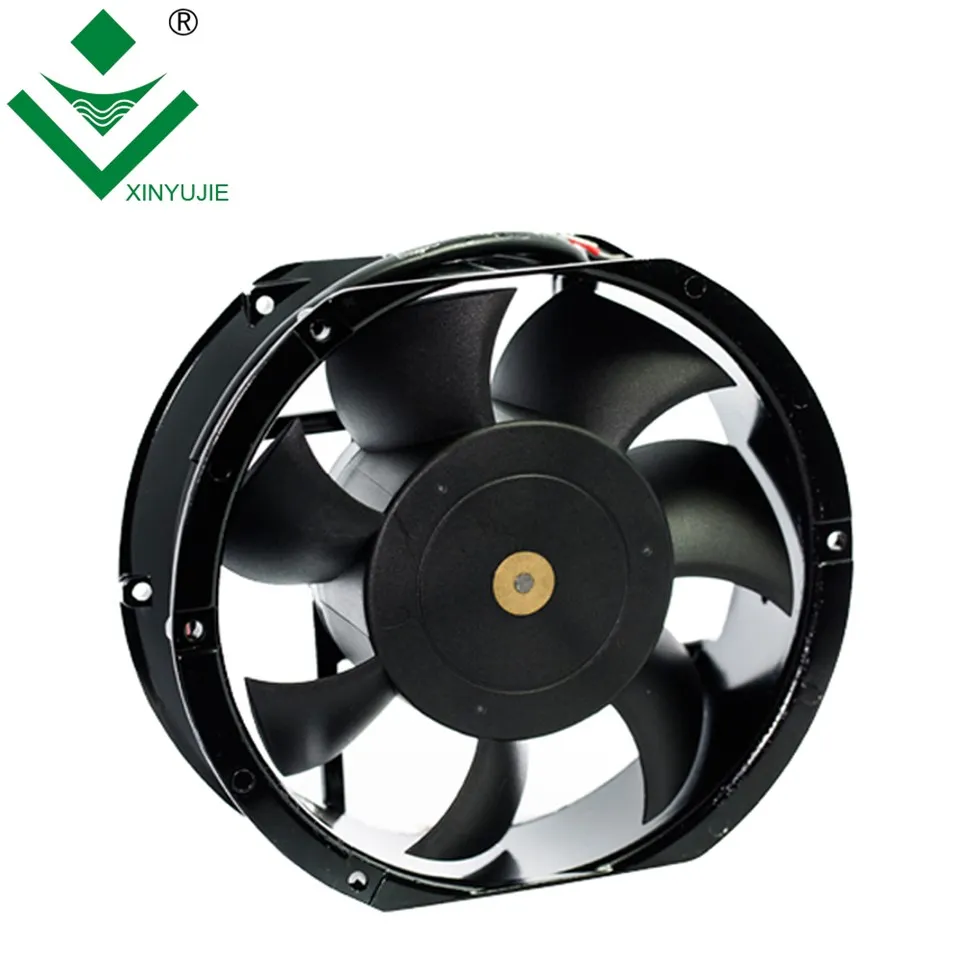
Radiator fans work by increasing airflow around the radiator. The radiator is the heart of your vehicle's cooling system. It contains thin and hollow pathways through which liquid coolant can flow. As coolant travels to your vehicle's engine, it will absorb heat. The hot coolant will then return to the radiator where it's exposed to air from the fans.
Some air will inevitably flow over the radiator while your vehicle is in motion. If your vehicle is stopped, however, it won't receive any airflow. The lack of airflow will then result in inefficient cooling. The coolant will remain hot as it travels through the radiator. Instead of releasing its heat at the radiator, the hot coolant will simply go back to your vehicle's engine, which could lead to overheating.
How to Check a Radiator Fan
Firstly, you'll need to locate the fuse boxes on your vehicle. This may differ from car to car, so for the sake of this test, we'll assume there is an under-dash fuse box and an under-hood fuse box.
Once they are located, you will need to set your multimeter to the correct setting. As most cars have a 12V battery (with negative to earth) and are calibrated to take this much voltage, set your multimeter to Direct Current Voltage (DCV). You'll also be able to select which number range will be most accurate for a 12V circuit.
From here, make sure the engine is off with accessories powered on, and connect the black lead (negative) to an earth point. This is for under-dash fuses. Next, connect the red lead (positive) to the fuse contact. There will be multiple contacts on each fuse.
Evaluate the reading. If the reading is about 12V, then the fuse is working correctly. If you get 12V on one contact and 0V on the other, then this indicates a blown fuse. If you get 0V on both contacts, there is no power connected to the fuse. That likely means it is not properly connected to the negative battery terminal or ground. Detach and try again.
If you have determined that the problem is a blown fuse, this will need to be replaced to ensure the fan works as it should.
Our factory
Shenzhen Xinyujie Technology Co., Ltd has been devoted to cooling fan manufacture and R&D since 2007. Our fan is involving in multiple fields such as 3D printer, Accumulator, Home appliance, Inverter, Greenhouse, Medical equipment and many other electric products.Our fan series are including DC axial fan, DC blower fan, AC fan, EC fan. Additionally, the fan could be customized according to your requirements for diversecurrent, voltage, speed, air flow, bearing type, cable and connector. Moreover, fan built-in optional function is available such as PWM, Tachometer, Alarm, Temperature control,reversing rotation , fireproof, waterproof (IP44-IP67) etc.

Certificate

FAQ
As one of the leading radiator fan manufacturers in China, we warmly welcome you to buy cheap radiator fan made in China here from our factory. All customized products are with high quality and competitive price.
-
![XYE-6025-PWM]()
-
![12038BK-K High Speed Dc Fan]()
-
![60X60X25MM DC Cooling Fan 24V 6025H24-K]()
-
![12032 Blower Fan For 3D Printer]()
-
![51X51X15MM Humidifier 5V 12V DC Blower Fan]()
-
![3D Printer Blower Fan 40X40X20MM]() 3D Printer Blower Fan 40X40X20MMThe 40X40X20MM blower fan is widely used for 3D printer,humidifier and so on.It's optional function ofread more
3D Printer Blower Fan 40X40X20MMThe 40X40X20MM blower fan is widely used for 3D printer,humidifier and so on.It's optional function ofread more