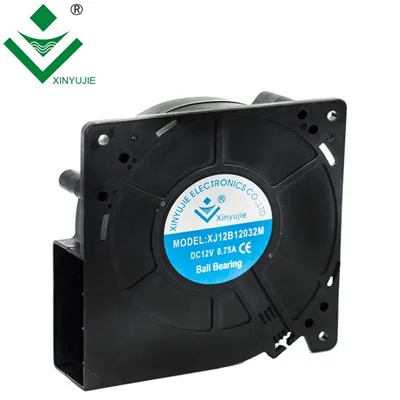
All motor and electronic product designers who need to use cooling fans to dissipate heat must determine the air volume required for a particular system. The required air volume depends on understanding the power consumption of the system and whether it can remove enough heat to prevent the system from overheating. In fact, the service life of the system will be reduced due to insufficient cooling system, so design engineers should also understand that the sales volume and price of the system may decrease if the service life of the system does not meet the user's expectations.
To select the right ventilation components, the following goals must be considered:
Best air flow efficiency
Smallest suitable size
Minimum noise
Minimum power consumption
Maximum reliability and service life
Reasonable total cost
Choosing a cooling fan or blower through the following steps can help you achieve the above goals.
The first thing is to know the total cooling requirements. To understand the total cooling requirements, there are three points:
1. The heat that must be converted (i.e., temperature difference DT)
2. The number of watts to offset the converted heat (W)
3. The air volume required to remove the heat (CFM)
The total cooling requirements are very important for the efficient operation of the system. Efficient system operation must provide ideal operating conditions so that all components in the system can perform to their maximum function and have the longest service life.
The second is to understand the total cooling demand and use the following method to obtain the required air volume for the equipment.
1. Calculate the heat generated inside the equipment.
2. Determine the allowable temperature rise range inside the equipment.
3. Calculate the required air volume from the equation.
If the heat dissipation inside the system equipment and the allowable total temperature rise are known, the required air volume for cooling the equipment can be obtained.