

Fan power
Fan power is a very important condition that affects the cooling effect of the fan. The larger the power, the stronger the wind force of the fan. Most computers sold on the market are DC 12V, and the power ranges from 0.X watts to 2.X watts. The power size needs to be selected according to the heat generated by your CPU. In theory, it is better to choose a fan with slightly larger power because the speed of this fan is higher. But the author would like to remind everyone here that high power cannot be emphasized one-sidedly. This needs to match the power of the computer itself. If the power is too large, it will not only fail to achieve a good cooling effect, but may increase the workload of the computer, which will produce a vicious cycle and ultimately shorten the life of the CPU fan. Therefore, when choosing the power size of the CPU fan, the principle of sufficient should be followed.
Fan diameter
This performance parameter also has a direct impact on the fan's air volume. It means that within the allowable range, the larger the fan diameter, the greater the fan's air volume and the larger the wind effect. Usually, there is a reserved space in the host case for installing an 8cm×8cm axial fan. If it is not installed in the standard position, there is no such restriction. In this case, we can choose a slightly larger fan. For this indicator, what I want to say is that the selected fan diameter must be coordinated with the chassis structure of your computer to ensure that the fan does not affect the normal operation of other computer devices, and to ensure that there is enough free space in the computer chassis to facilitate the removal of other accessories.
Fan speed
The fan speed is inseparable from the fan power, and the speed directly affects the fan power. It is usually believed that within a certain range, the higher the fan speed, the greater the air volume it transmits to the CPU, and the better the cooling effect of the CPU. However, once the fan speed exceeds its rated value, the fan will generate heat when it works under overload for a long time. The longer the time, the greater the heat generated. At this time, the fan will not only fail to achieve a good cooling effect, but will "add fuel to the fire"; in addition, the fan may generate strong noise during high-speed operation, which may shorten the life of the fan over time; and higher operating speeds require greater power to provide "power source", and high power source is obtained from the high power in the motherboard and power supply. The motherboard and power supply will often cause system instability under overload power. Therefore, when we choose the fan speed, we should decide according to the heat generated by the CPU. It is best to choose a fan with a speed between 3500 and 5200 rpm.
Fan material
Since the heat of the CPU is conducted to the heat sink, and then the heat of the heat sink is taken away by the cold air brought by the fan, and the speed of heat conduction by the fan is determined by the material of the heat conducting plate that constitutes the fan, the material quality of the radiator plays a decisive role in the heat conduction performance. For this reason, when choosing a fan, we must pay attention to whether the thermal conductivity of the fan heat conducting plate is good. Among the materials with good thermal conductivity, gold and platinum are both good. The reason why AOPEN's AX6BC series motherboards are plated with gold on the north bridge chip heat sink is, on the one hand, to show the noble status, and on the other hand, it is conducive to heat dissipation. Copper is also a metal with excellent thermal conductivity. If copper is used to produce heat sinks, the heat dissipation effect will be very ideal, but copper is relatively solid, difficult to process, heavy, and costly, so it is rare to see heat sinks produced using copper. Next to copper are iron and aluminum. These two are very popular metals, but if you compare the two horizontally, you will find that iron is easy to rust, hard, difficult to process, and heavy, while aluminum does not have these troubles, so aluminum has become the best material for producing heat sinks.
CPU fan technical specifications
Previous
Fan noise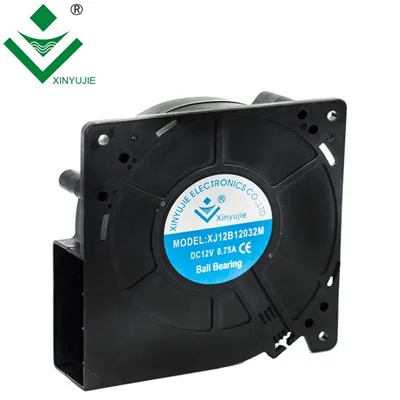


Send Inquiry